
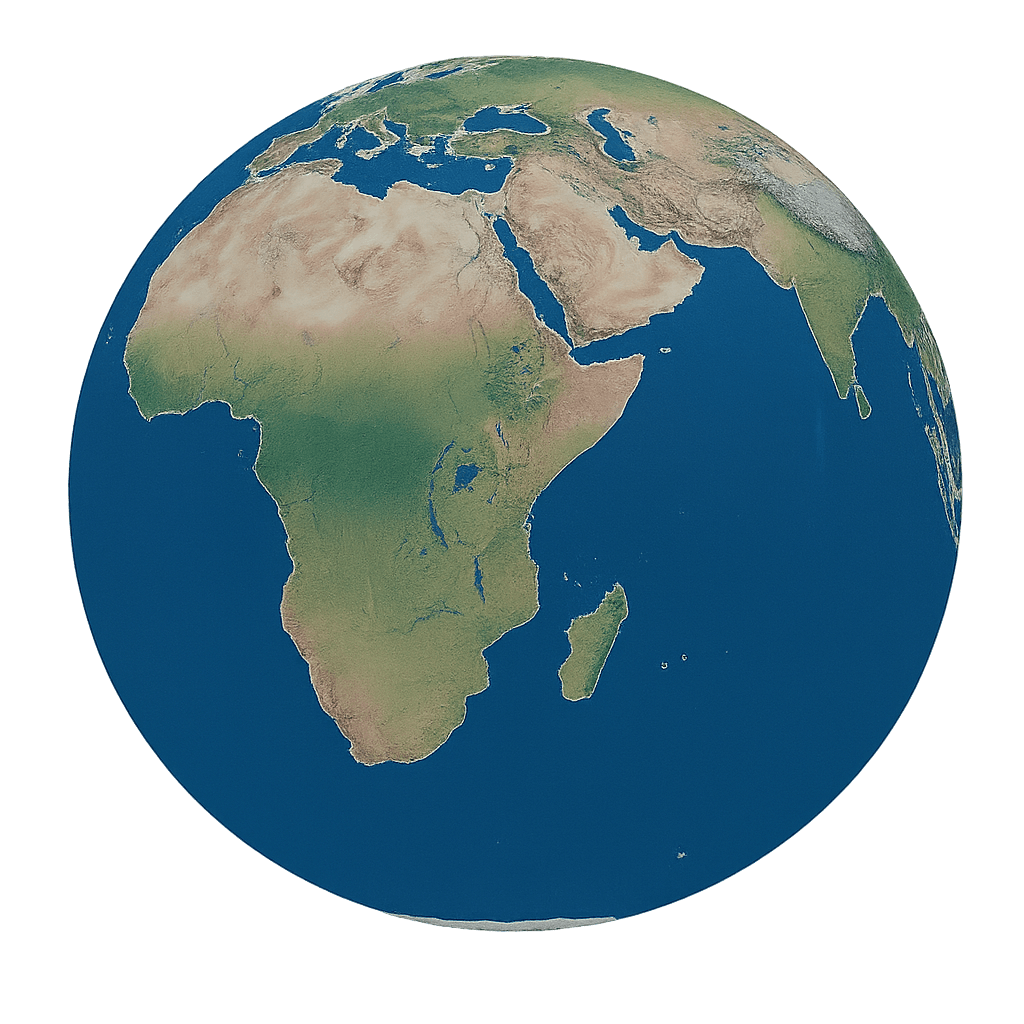
Madagascar redraws its conservation map after 31 years
Madagascar has released a new science-backed priority map for terrestrial conservation, identifying about 18 million hectares for action under its 30x30 Biodiversity Plan. The findings are meant to guide protection, restoration, research, and funding over the next decade as the country moves to protect 30% of its land and sea by 2030.
Why it matters: - Madagascar’s new priority map gives the country a shared target for conservation decisions after 31 years without a full terrestrial re-prioritization. - The plan focuses attention on about 18 million hectares, or roughly one-third of the country, where action could have the biggest impact on biodiversity. - The map is meant to steer government, conservation groups, communities, and funders toward the same set of priorities under the 30x30 Biodiversity Plan. - Madagascar holds 5% of the world’s species on just 0.4% of Earth’s land, and 90% of those species are found nowhere else.
What happened: - Madagascar released the results of a landmark scientific workshop during London Climate Week. - In late March 2026, 70 participants, including 50 scientists across seven taxonomic groups, completed the country’s first full scientific re-prioritization of terrestrial biodiversity since 1995. - Seventy percent of the participants were Malagasy. - The workshop produced a consensus map covering roughly 18 million hectares of priority land. - The workshop also gave dedicated attention to freshwater ecosystems for the first time.
The details: - Areas independently flagged by three or more expert groups point to about 2.7 million hectares for new protected areas. - The same process identified about 3.3 million hectares to extend existing protected areas. - Close to 2 million hectares were identified for ecological corridors to reconnect fragmented landscapes. - About 12.7 million hectares were flagged as zones that need rapid inventory work because scientific knowledge is still incomplete. - Nine unprotected freshwater zones covering about 1.6 million hectares were identified as critical for water security and fish populations. - The workshop drew on plants, lemurs, birds, reptiles and amphibians, other mammals, freshwater fish and aquatic plants, and arthropods. - Unlike earlier efforts, the 2026 workshop considered all terrestrial ecosystems, not mainly forests. - The work will feed directly into 30x30 implementation actions. - The country has spent 18 months moving from political commitment to a validated, costed, nationally owned biodiversity plan. - In February 2026, Madagascar designated 21 new protected areas covering 1.82 million hectares, bringing the national total to 8.88 million hectares. - In April 2026, Prime Minister Mamitiana Rajaonarison formally committed his government to the plan in Washington, DC. - The plan targets $150 million to $220 million in annual conservation financing. - Three pilot conservation landscapes are already operational. - The workshop was supported by Conservation Allies, Re:wild, Hempel Foundation, Rainforest Trust, and the Campaign for Nature. - The full report is available for download as A scientific basis for advancing terrestrial conservation priorities of Madagascar.
Between the lines: - The map’s “blank spaces” are being treated as a scientific finding, not just a data gap. - A separate assessment of Madagascar’s undocumented insects and invertebrates found that most of its priority area falls inside those same knowledge gaps. - Those areas are set to become the focus of urgent field surveys that will shape future protection decisions. - The workshop also signaled a leadership shift, with a generation of Malagasy scientists now leading the work after decades of international collaboration. - Communities are positioned as key partners, with local knowledge treated as an equal input to scientific analysis. - The release lands as world leaders and funders weigh whether 30x30 commitments are being matched with enough money.
What’s next: - The highest-confidence priority areas will be fast-tracked for protection over the next two years. - Targeted field surveys will fill knowledge gaps and guide action through the rest of the decade. - Madagascar is inviting governments, foundations, investors, and conservation partners into the national model. - The report says the workshop’s scientific consensus provides the clearest roadmap yet for meeting Madagascar’s conservation challenge.
The bottom line: - Madagascar now has a new, science-backed map for where conservation action should start first, and the next test is whether funding and implementation can keep pace with the country’s ambition.
Disclaimer: This article was produced by AGP Wire with the assistance of artificial intelligence based on original source content and has been refined to improve clarity, structure, and readability. This content is provided on an “as is” basis. While care has been taken in its preparation, it may contain inaccuracies or omissions, and readers should consult the original source and independently verify key information where appropriate. This content is for informational purposes only and does not constitute legal, financial, investment, or other professional advice.
Sign up for:
Political Reporter Online
The daily local news briefing you can trust. Every day. Subscribe now.
Check Your Email!
We sent a one-time activation link to: .
Confirm it's you by clicking the email link.
If the email is not in your inbox, check spam or try again.
Welcome back!
is already signed up. Check your inbox for updates.